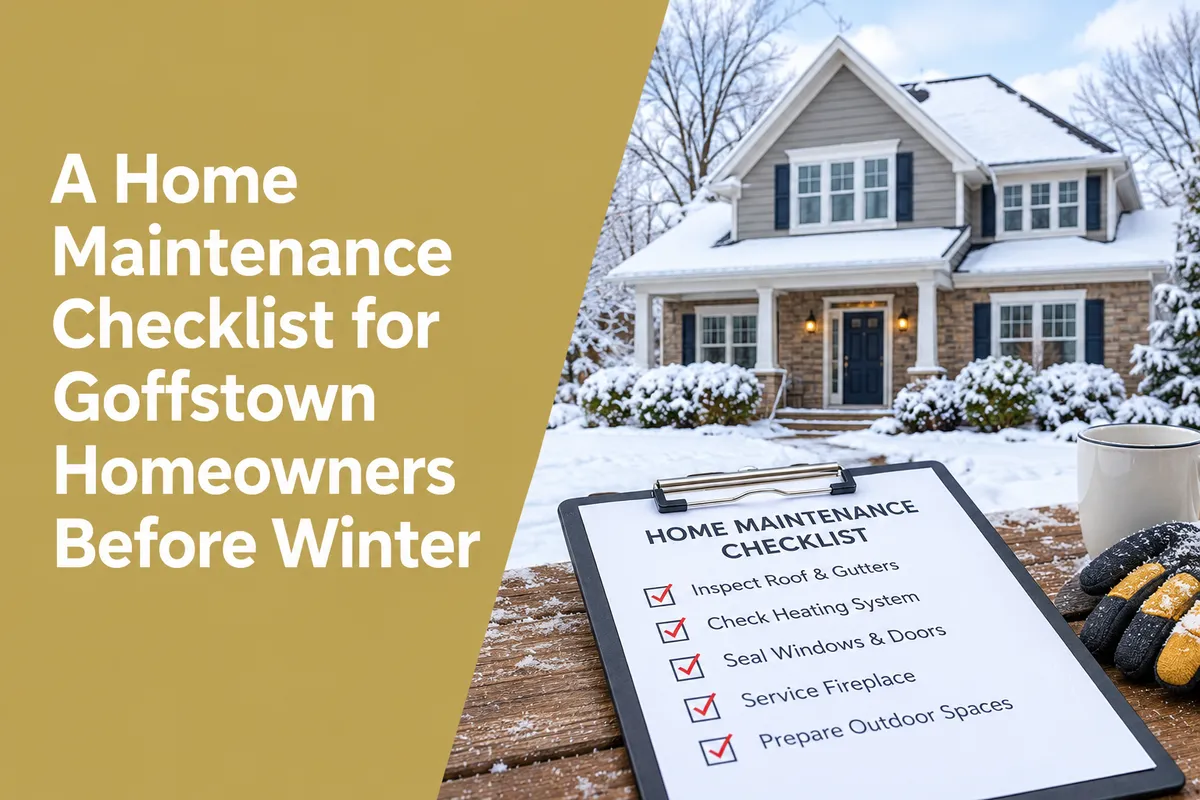
A Home Maintenance Checklist for Goffstown Homeowners Before Winter
Winter preparation is an important part of owning a home in Goffstown, New Hampshire. As temperatures drop and snow and ice become part of everyday life, small maintenance issues can become more difficult to address. A loose gutter, an underperforming heating system, or a draft around a window may create unnecessary discomfort during the colder months.
For homeowners in Goffstown, preparing for winter means looking at the entire property, from the roof and foundation to the heating system and outdoor walkways. Completing a seasonal inspection early can help identify problems before freezing temperatures arrive.
Whether you have lived in Goffstown for years or recently purchased a home, this practical checklist can help you organize your fall maintenance tasks.
1. Start With the Roof, Gutters, and Drainage
Your roof is one of the first places to inspect before winter. Snow, ice, and freezing rain can put additional stress on roofing materials, especially when existing damage has gone unnoticed.
Look for missing or damaged shingles, loose flashing around chimneys, and visible signs of water intrusion. If the roof is difficult to access, arrange for a qualified professional to inspect it rather than climbing onto it yourself.
Gutters also deserve attention before the first significant snowfall. Leaves and other debris can prevent water from draining properly, allowing moisture to collect near the roofline or foundation.
Check that:
Gutters and downspouts are clear of leaves and debris.
Downspouts direct water away from the foundation.
Visible roof damage is addressed before winter weather.
Drainage areas are not blocked by soil, leaves, or other obstructions.
In Goffstown, where fall foliage can leave plenty of leaves around residential properties, gutter maintenance is a particularly useful seasonal task.
2. Make Sure Your Heating System Is Ready
A reliable heating system is essential when New Hampshire temperatures fall below freezing. Before the coldest weather arrives, schedule routine maintenance for your furnace, boiler, or other heating equipment according to the manufacturer's recommendations.
A heating professional can check system operation, inspect relevant components, and identify maintenance needs. Homeowners should also replace or clean filters as directed and make sure supply and return vents are not blocked by furniture or rugs.
Carbon monoxide safety should be part of winter preparation, too. Test carbon monoxide alarms and smoke detectors, check their batteries where applicable, and follow the manufacturer's replacement guidance.
For homes with fuel-burning appliances, proper ventilation and safe operation are essential. Never use an outdoor generator, grill, or fuel-burning heater inside the home or in an enclosed garage.
3. Find and Seal Drafts Around Windows and Doors
Cold air entering through gaps can make certain rooms uncomfortable and increase heating demands. Walk through your home on a cool day and check around windows, exterior doors, and other openings.
Look for cracked caulking, damaged weatherstripping, loose door sweeps, and noticeable drafts. Replace worn materials where appropriate, using products suited to the surface and weather conditions.
Pay attention to basement windows and doors leading to garages, as well as less frequently used rooms. These areas can be overlooked during routine cleaning and maintenance.
If you are considering replacement windows, first determine whether the problem can be addressed with repairs or weatherization. A qualified contractor can help evaluate persistent drafts, condensation, or signs of moisture damage.
4. Protect Pipes Before Freezing Temperatures Arrive
Frozen pipes can interrupt household water service and may burst, causing substantial water damage. Pipes in unheated basements, crawl spaces, garages, and exterior walls may need additional attention.
Inspect accessible plumbing for signs of leaks and identify pipes located in areas that become especially cold. Insulate vulnerable pipes with suitable materials, following product instructions.
Before winter, homeowners should also:
Disconnect and drain outdoor garden hoses.
Shut off and drain exterior hose connections where the plumbing system allows it.
Check that garage doors remain closed when not in use.
Learn where the main water shutoff is located.
During severe cold, maintain adequate indoor heat and follow appropriate guidance for protecting plumbing. If a pipe freezes, avoid using an open flame to thaw it. Contact a licensed plumber if you cannot safely resolve the issue.
5. Prepare the Yard and Outdoor Areas
Outdoor maintenance is not just about appearance. Clearing leaves, securing loose items, and checking drainage can help reduce problems when snow and ice arrive.
Trim branches that appear damaged or pose a risk to the roof, driveway, or utility lines. Leave work near power lines to qualified professionals. Store patio furniture, grills, and seasonal equipment according to the manufacturer's recommendations.
If your property has a long driveway or sloped walkway, plan how you will keep access clear during winter weather. Arrange snow removal in advance if you will need professional assistance.
Homeowners in Goffstown may have properties with mature trees, wooded edges, or longer driveways. The amount of preparation needed will depend on the property's layout and the condition of its outdoor features.
6. Check the Basement and Foundation for Moisture
Before freezing weather, inspect the basement or crawl space for dampness, musty odors, water stains, and visible cracks. These signs do not always indicate a major problem, but they should not be ignored.
Check whether downspouts discharge water away from the house and whether the ground slopes away from the foundation where practical. Remove debris that could interfere with drainage.
If your basement has a sump pump, test it according to the manufacturer's instructions. Check that its discharge line is clear and that any backup system is maintained as recommended.
Homes can have different foundation designs and drainage conditions, so avoid assuming that the same solution will work for every property. If you notice recurring water intrusion, significant foundation movement, or unexplained moisture, consult an appropriate building or foundation professional.
7. Review Insulation and Attic Ventilation
An attic inspection can reveal issues that affect comfort and energy use during winter. Look for obvious gaps in insulation, signs of roof leaks, damp materials, or evidence of pests.
Proper attic ventilation matters alongside insulation. Blocking ventilation openings or adding insulation without understanding the existing setup can create moisture-related problems.
If snow and ice have caused problems on your roof in previous winters, consider having a qualified professional evaluate the roof, attic insulation, ventilation, and air leakage together.
A home energy assessment may also help identify areas where weatherization improvements could make the home more comfortable. The best upgrades depend on the building's condition and the homeowner's priorities.
8. Get Ready for Snow, Ice, and Winter Power Interruptions
A winter-ready home needs a plan for more than heating. Snowstorms and ice can affect travel, outdoor access, and electricity.
Before winter, inspect outdoor lighting and make sure entrances, stairs, and handrails are in good condition. Keep snow-removal tools in a convenient location and stock appropriate ice-melting products that are suitable for your walking surfaces.
It is also useful to prepare a small household emergency supply with flashlights, spare batteries, essential medications, drinking water, and other items your household may need during a temporary power interruption.
If you have a standby generator, arrange maintenance as recommended and follow all safety instructions. Generators must be operated outdoors, well away from doors, windows, and vents, to prevent carbon monoxide from entering the home.
9. Keep a Record of Repairs and Seasonal Maintenance
A maintenance checklist becomes more useful when you track what has been inspected, repaired, or scheduled. Keep receipts, service records, appliance manuals, and warranty information in one place.
Record the dates of heating maintenance, chimney inspections, roof repairs, plumbing work, and other significant services. If you notice a recurring issue, write down when it occurs and where it appears.
These records can help you plan future maintenance and explain the home's upkeep history if you decide to sell.
For homeowners considering a future move, organized maintenance records may also make it easier to answer buyer questions about repairs and improvements. They do not replace required disclosures or professional inspections, but they can help keep property information clear and accessible.
What Goffstown Homeowners Should Prioritize First
If your fall schedule is limited, begin with work that affects safety and the home's ability to withstand freezing weather. Heating-system maintenance, vulnerable plumbing, roof concerns, drainage, and functioning safety alarms deserve early attention.
Goffstown homeowners should also consider the specific features of their property. A home with a finished basement may require different moisture checks from a home with a crawl space. A property with a private well, septic system, long driveway, or wood-burning appliance may have additional maintenance requirements.
The goal is not to complete every possible upgrade in one weekend. It is to identify the work that matters most for your home's condition and make a realistic plan before severe winter weather sets in.
Local Real Estate Perspective for Goffstown and Nearby Communities
Winter readiness can be relevant whether you are staying in your current home, preparing to list it, or exploring a move within southern New Hampshire.
Homeowners considering a sale can focus on visible upkeep, safe entryways, working systems, and clear documentation of completed repairs. These steps can help prospective buyers understand how the property has been maintained without promising a particular sale outcome.
Mark Lynch of Remarkable Real Estate NH serves clients in Manchester and surrounding communities, including Goffstown, Bedford, Hudson, and Amherst. For homeowners planning a move, understanding the property's condition and preparing for the next season can be useful parts of the broader real estate conversation.
Frequently Asked Questions
When should Goffstown homeowners start preparing for winter?
Start in early fall, before temperatures regularly approach freezing. This allows time to schedule contractors and address repairs.
What home systems should be checked first?
Prioritize heating equipment, vulnerable plumbing, the roof and gutters, drainage, and smoke and carbon monoxide alarms.
How can I reduce the risk of frozen pipes?
Insulate vulnerable pipes, disconnect outdoor hoses, protect unheated areas, and maintain adequate indoor heat during cold weather.
Should I inspect my attic before winter?
Yes. Look for signs of leaks, moisture, insulation gaps, and ventilation concerns. Consult a professional if you identify potential problems.
Does winter maintenance matter when selling a Goffstown home?
Yes. Addressing visible maintenance issues and organizing repair records can help buyers understand the property's condition.
Prepare Your Goffstown Home for the Season Ahead
A little preparation before winter can help Goffstown homeowners spot maintenance concerns, improve everyday comfort, and plan repairs before harsh weather arrives. Focus on the home's essential systems first, then work through outdoor maintenance, moisture checks, and winter safety preparations.
If you are also considering buying or selling a home in Goffstown, Manchester, Bedford, Hudson, or Amherst, Mark Lynch at Remarkable Real Estate NH can be a local point of contact for discussing your real estate plans. For home repairs and safety-related concerns, work with the appropriate licensed or qualified professionals.